01 Oct 2026
Investors, developers can harness opportunities in wind and solar projects
Investor appetite in the renewable energy sector is growing, driven by rising demand and New Zealand’s...
New Zealand business leaders don’t want change this election, but they do want faster delivery. Our 2026 Pre-Election Business Survey results show that while local businesses are doing better, translating into broad support for the Government’s management of the economy, they also support Opposition policies such as clearer safeguards for AI and faster payments for small businesses.
Time to read: 5 mins
Demand for the next government to prioritise health and infrastructure spending has also risen sharply, underlining clear expectations around what needs to be delivered in the next term.
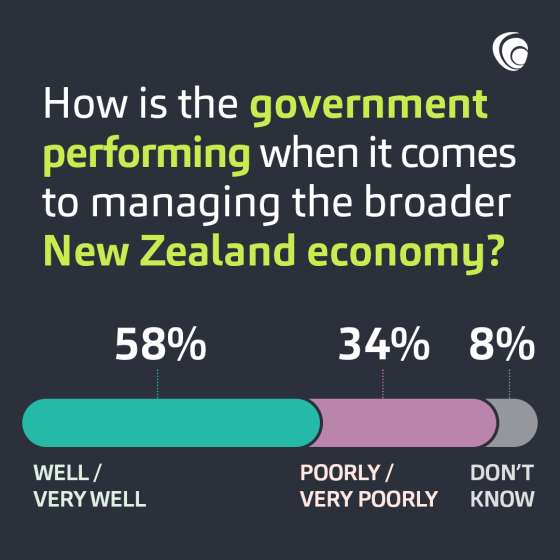
Of the nearly 350 business leaders who took part in our survey, 58 per cent believe the Government is managing the broader economy well or very well. To put this in context, just 14 per cent said the same ahead of the 2023 election, under the previous Labour government.
That confidence is explained by the fact that 49 per cent said their business performance had improved over the past 12 months, nearly double the 25 per cent recorded in Baker Tilly Staples Rodway's 2025 pre-Budget survey. Just under a quarter (24 per cent) said performance had worsened, down from 32 per cent last year.
Meanwhile, 59 per cent expect their performance to improve over the next 12 months, although only 9 per cent anticipate a large improvement. A further 31 per cent expect conditions to remain steady.
Baker Tilly Staples Rodway National Chair David Searle says the result is a vote for continuity, rather than massive policy shifts. "We've talked about green shoots for a while, but when the rubber hits the road, are we seeing real change? These figures show the improvement is real for many businesses, and that's created a stronger (if still muted) sense of optimism. Most businesses aren’t expecting a dramatic lift, but they do expect some improvement as long as the Government holds to its current course.
"However, it must be noted that a third (34 per cent) of business leaders rate the Government’s economic performance poor or very poor, illustrating significant pockets of hardship remaining even though construction has now started to improve. Inflation also remains the top concern. Looking at the recent news that fuel prices are rising again and forecasts the Official Cash Rate will keep going up for the next six months, there’s still some work to do to counter ongoing challenges," he says.
Despite fears of AI triggering wide-scale redundancies, only 15 per cent of business leaders surveyed said they expected AI to enable any workforce reduction in the next 12 months. A further 69 per cent said they didn't, 3 per cent anticipated a reduction (but not due to AI), and the rest were unsure.
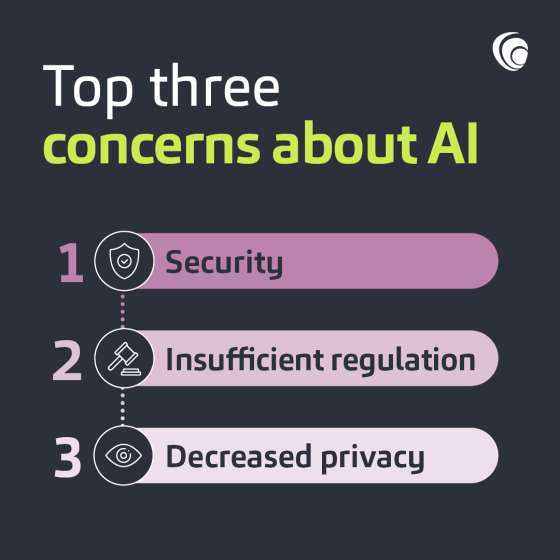
However, Prime Minister Christopher Luxon's message that the opportunities presented by AI outweigh the risks doesn’t appear to have eased business concerns. More than half of business leaders ranked AI security threats as a major concern (58 per cent), and were worried about insufficient regulation of AI technologies (53 per cent).
Labour's proposal for an Office of AI, alongside an online safety regulator, could gain ground with business voters who want clearer accountability. However, respondents were not supportive of a Labour-led government overall, with 73 per cent saying if a Labour-led government were elected, it would make their operating environment worse – little changed from 75 per cent in 2023. Contrast that with the 56 per cent who believed a National-led government would make the operating environment better, with 34 per cent believing things would stay much the same.
Fifty-seven per cent of survey respondents did support Labour's Small Business Action Plan policy that would require large organisations to pay smaller suppliers within 15 days. Thirty per cent wanted more information before deciding, while 14 per cent opposed the proposal.
On the other hand, support for wealth tax as proposed by the Greens (a 2.5 per cent tax on the net assets of the super-rich above $10 million) was lower than at the last election. Those in favour fell to 18 per cent from 24 per cent in 2023. Support for a capital gains tax excluding the family home also declined after reaching a high of 45 per cent in 2025’s pre-Budget poll, falling to 34 per cent this year.
"It’s possible what we’re seeing is a result of recent economic challenges adding extra burdens, and fear of the influence of smaller parties and the potential for additional taxes to be negotiated as part of a coalition agreement. For example, the Opportunity Party's land-value tax proposal may be sharpening business sensitivity to the wider tax debate," says David.
"With house prices stabilising or even falling in many areas, there’s also not the burning platform to lower prices or capture capital gains we’ve seen in previous years."
Healthcare and medical research remains business leaders' top government spending priority, ranked first by 41 per cent compared with 28 per cent in 2023. Infrastructure has strengthened almost as sharply, rising to 34 per cent from 25 per cent before the last election, with more respondents ranking it in their top three priorities than healthcare (86 per cent versus 77 per cent).
The opening of the City Rail Link resulted in patronage of Auckland’s rail networks increasing around 62 per cent in its first week, showing the high level of demand for improved services. "Now that there is cross-party alignment on the National Infrastructure Plan, these results send a signal that businesses want to see that consensus converted into delivery of the roads, water, hospitals and other core infrastructure the economy depends on," says David.
"New Zealand cannot afford another cycle of projects being stopped, restarted or redesigned whenever the Government changes. As our poll results show, consistency and continuity are what businesses are keen to see over the next term."
DISCLAIMER No liability is assumed by Baker Tilly Staples Rodway for any losses suffered by any person relying directly or indirectly upon any article within this website. It is recommended that you consult your advisor before acting on this information.
Our website uses cookies to help understand and improve your experience. Please let us know if that’s okay by you.
Cookies help us understand how you use our website, so we can serve up the right information here and in our other marketing.